(Click on the link below the image)
From Publishers WeeklyGee's Bend, Alabama, is a hamlet of 750 residents, most of whom are the descendants of slaves from the former Pettway plantation (and bear the surname Pettway), who during the New Deal purchased farms from the government. For much of the last century, the women of Gee's Bend have produced some of the most striking examples of American vernacular art, sharing them among the community and storing them within their homes. Aside from a brief stint of notoriety during a Civil Rights-era "Freedom Quilting Bee," this catalogue, accompanying an exhibit at the Museum of Fine Arts, Houston and New York's Whitney Museum of American Art, marks the work's entry into the public sphere. Founded by art collector William Arnett and Jane Fonda, the nonprofit Tinwood Alliance devotes itself to the cultural legacy of Gee's Bend, here offering 195 illustrations (162 in full color) documenting the quilts and the lives of many of their makers. The oversize format allows the many full-page reproductions to approximate the sensation of a large quilt spread on the page; the many "Housetop" quilts, with arresting geometric patterns and terrific color sense, speak for themselves. The book and exhibition make an important contribution to American cultural history.
Copyright 2002 Reed Business Information, Inc.
From BooklistAt first glance, the quilts of this collection are simply stunning--rich colors in surprising combinations, refreshingly irregular geometric compositions with hardly a right angle among them, big blocks whose seams virtually vibrate with energy. Then consider the history of the community they come from, and these quilts become a stunning illustration of resourcefulness. Gee's Bend, a remote peninsula on the Alabama River, is an isolated place, one that has known extreme poverty and struggle. Its quilters of the twentieth century are showcased here. Three insightful essays on the community's history and its quilting tradition make up for a self-consciously scholarly introduction. The words of the quilters themselves follow. Brief accounts of their lives and thoughts on quilting accompany full-page photographs of their accomplishments. This large-format hardcover, and coinciding exhibition at the Whitney Museum of American Art, should guarantee the women of Gee's Bend the prominence they deserve in the story of the American quilt.
Marya GraffCopyright © American Library Association. All rights reserved Product DescriptionIn 2002, Gee’s Bend burst into international prominence through the success of Tinwood’s Quilts of Gee’s Bend exhibition and book, which revealed an important and previously invisible art tradition from the African American South. Critics and popular audiences alike marveled at these quilts that combined the best of contemporary design with a deeply rooted ethnic heritage and compelling human stories about the women. Gee's Bend: The Architecture of the Quilt is a major book and museum exhibition that will premiere at the Museum of Fine Arts, Houston (MFAH), in June 2006 before traveling to seven American museums through 2008. The book's 330 color illustrations and insightful text bring home the exciting experience to readers while displaying all the cultural heritage and craftsmanship that have gone into these remarkable quilts.
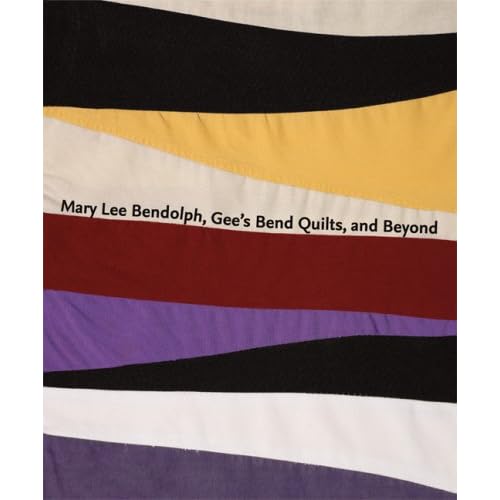
 Mary Lee Bendolph, Gee's Bend Quilts, and Beyond
Product Description
Mary Lee Bendolph’s extraordinary patchworks garnered national attention when they were featured among the works of other quiltmakers from her tiny, predominately African American community in the 2002 blockbuster exhibition and book,
The Quilts of Gee’s Bend. This beautiful book examines Bendolph’s inspiration, creative process, and individual genius, as well as her profound connection to the cultural practices and expressive traditions out of which her work arises. It studies her artistic relationships with other artists — her mother, Aolar Mosely; her daughter, Essie Bendolph Pettway; her daughter-in-law Louisiana P. Bendolph; and two self-taught Alabama artists, Lonnie Holley and Thornton Dial. Bendolph’s conception of herself as an artist is intimately connected to all of these aesthetic relationships, which together provide contexts for understanding the full scope and power of her work. As they intersect in Bendolph’s life and art, these deep social and aesthetic networks give rise to new pathways of artistic influence and exchange, to a body of work that is a powerful mixture of communal and individual creative energies.
Product DescriptionSince the 19th century, the women of Gee’s Bend in southern Alabama have created stunning, vibrant quilts. Beautifully illustrated with 350 color illustrations, 30 black-and-white illustrations, and charts, Gee’s Bend to Rehoboth is being·released in conjunction with a national exhibition tour including The Museum of Fine Art, Houston, and the Whitney Museum of American Art.



 Beautiful, work.,







 Posts
Posts


